Quick answer
The best way to remove chewing gum from pavements is heat. Superheated steam softens the gum so it lifts off with low pressure and no chemicals, and the area is safe to walk on once it cools. Scraping is slow and can mark paving, and ordinary pressure washing rarely shifts it. On heavily gummed areas, clean the whole surface for an even finish.
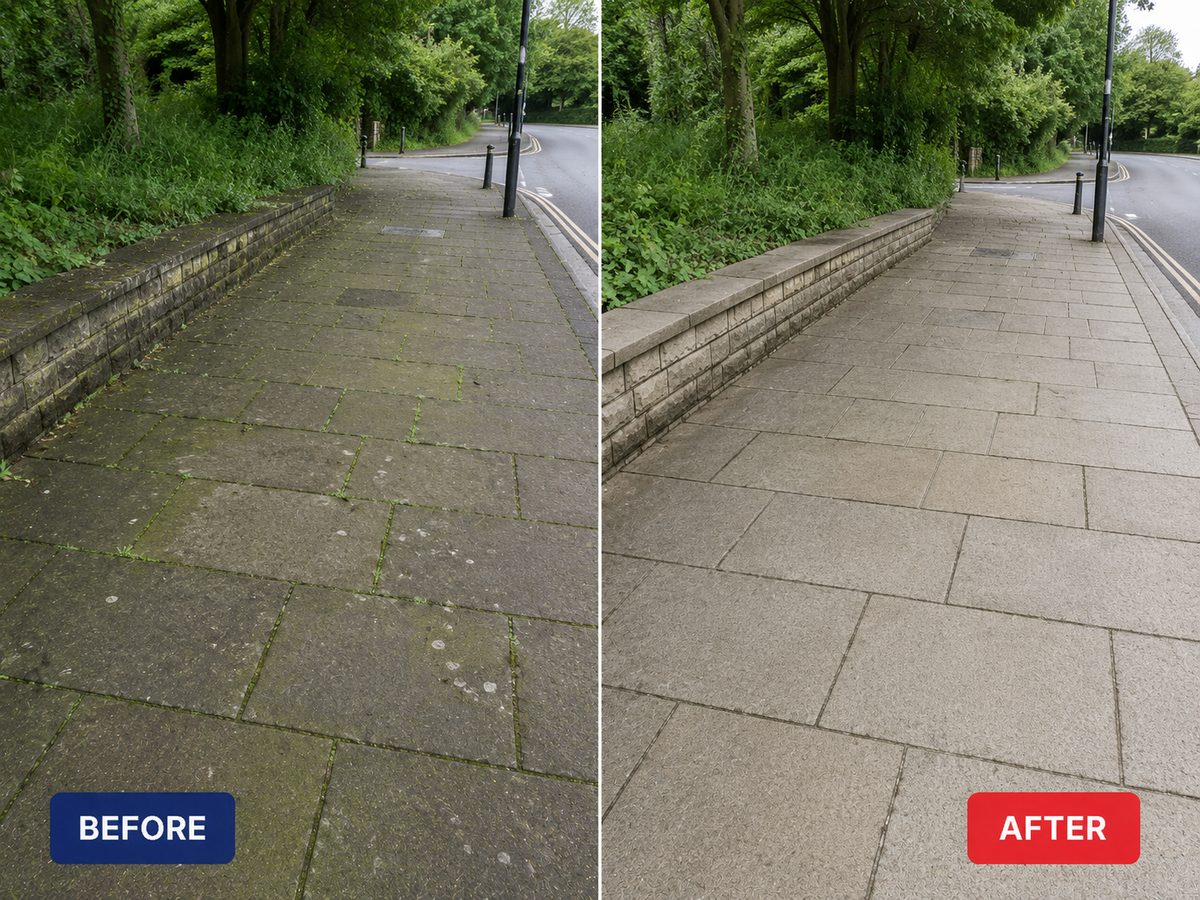
Walk down almost any high street and the paving is speckled with flattened black discs. Most people stop seeing them, until a section is cleaned and the surface underneath turns out to be several shades lighter.
This guide explains why gum is so hard to shift, what works, what doesn't, and how busy areas keep it under control.
Why is chewing gum so hard to remove?
Modern chewing gum is a synthetic polymer, effectively a soft plastic. It doesn't break down, so a dropped piece stays put until something removes it. Trodden in, it flattens, picks up dirt and bonds harder and harder to the surface, especially on porous or textured paving.
That's why sweeping, mechanical street sweepers and standard pressure washing leave it behind.
What is the best way to remove gum from pavements?
Heat. Superheated steam softens the gum back towards its original state, and a modest amount of pressure then lifts it cleanly. Each piece needs only a few seconds, so the slow part is covering the area, not the removal itself.
No chemicals are needed, which matters on pedestrian areas, near shopfronts and food premises. The ground can be walked on as soon as it's cool, with no exclusion zone.
Removing gum from a dirty pavement leaves clean spots where each piece was. On heavily gummed areas, clean the whole surface at the same time so you get an even finish rather than a polka-dot one.
What doesn't work
- Scraping by hand: slow, labour-intensive and can mark or damage the paving.
- Standard pressure washing: gum resists cold water, and high pressure can erode joints and soft paving.
- Harsh solvents: unnecessary, and leave residue where people walk.
Where gum builds up
Gum collects where people pause, not simply where footfall is highest: bus stops, taxi ranks, crossings, cash machines, shop doorways, station entrances and takeaway queues. That's useful, because it means you can target the hotspots rather than cleaning every metre of pavement.
How do town centres keep pavements gum-free?
- A deep clean of the whole area first, so the paving is one even colour.
- A regular programme at the hotspots, so gum never builds up again. Frequency depends on footfall.
- Combining gum removal with graffiti, sticker and general cleaning in one visit, which costs less than separate contractors.
- Early-morning or evening working, so the area is clean and dry before trading starts.
Frequently asked questions
Does steam damage paving?
No. Steam works at low pressure, using heat rather than force, so it's safe on block paving, flags, concrete and natural stone.
Does chewing gum removal use chemicals?
Not with steam. Heat softens the gum so it lifts away without any chemicals, which is why it's used in town centres, schools and near food premises.
How often should a high street have gum removed?
It depends on footfall. Busy areas usually benefit from a scheduled programme so gum never has a chance to build up. We recommend a frequency after seeing the site.
Who removes chewing gum from pavements?
On public highways it's usually the council. Business Improvement Districts, shopping centres, retailers and landlords often pay for specialist gum removal on their own frontages and precincts.
Need a high street, precinct or frontage cleaned?
Send us a photo and the location for a free quote. We work with councils, BIDs, retailers and landlords. Or call 0161 399 5247.