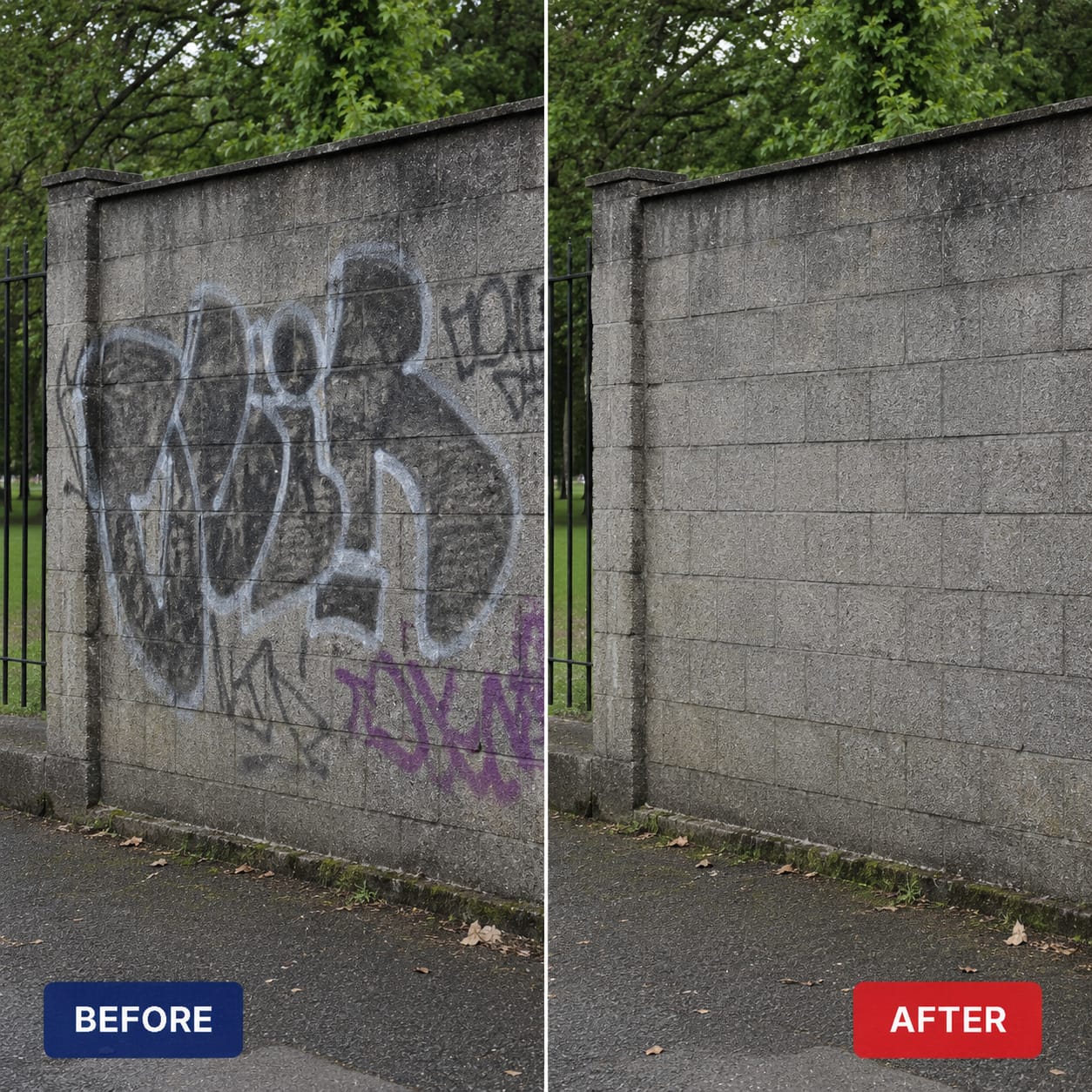
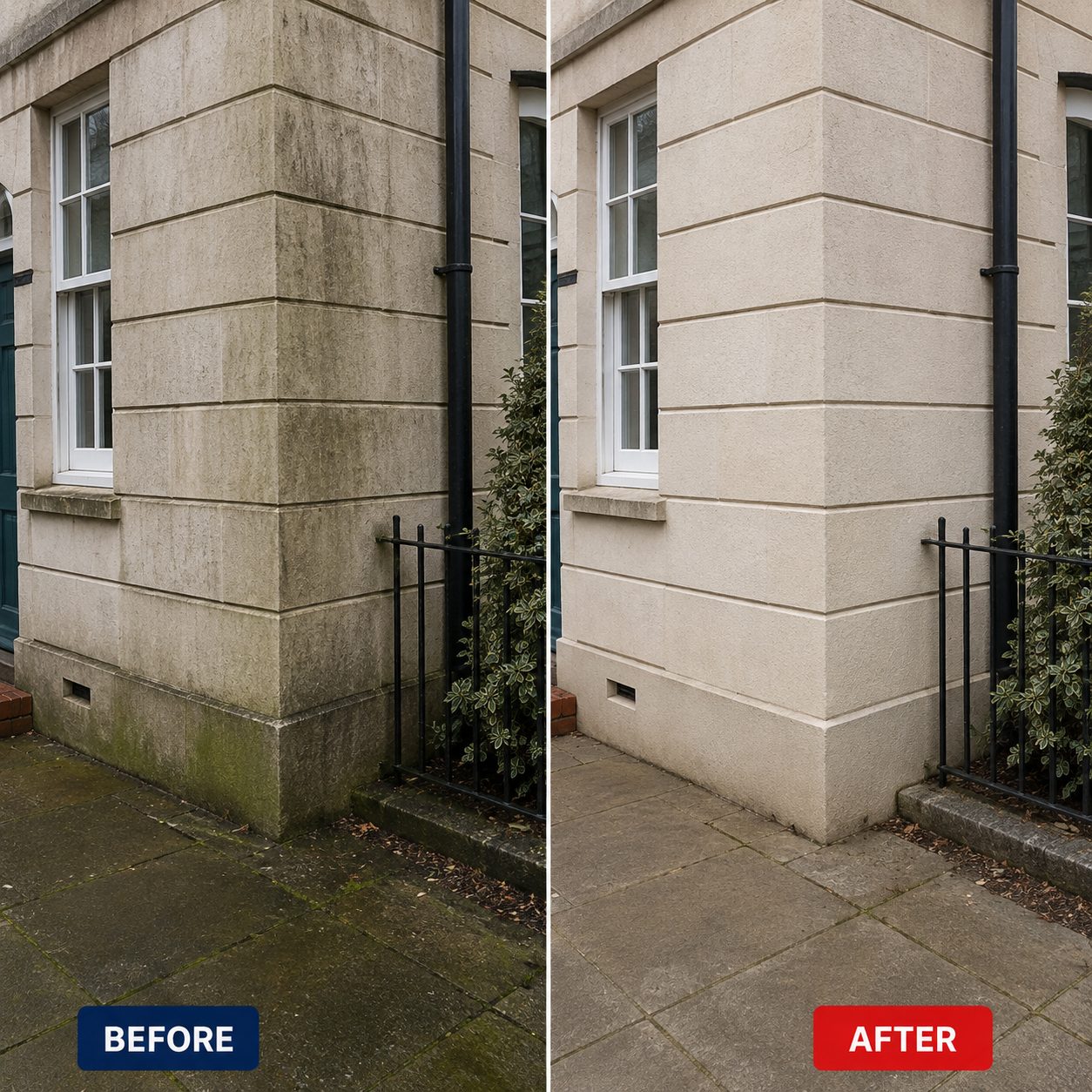
Quick answer
A sacrificial anti-graffiti coating is a breathable, wax-type layer that comes off with the graffiti and is re-applied after each clean. A permanent coating is a hard polyurethane-type film that stays in place through many cleans and can last years. The surface usually decides: walls that need to breathe suit sacrificial; often-hit modern surfaces suit permanent.
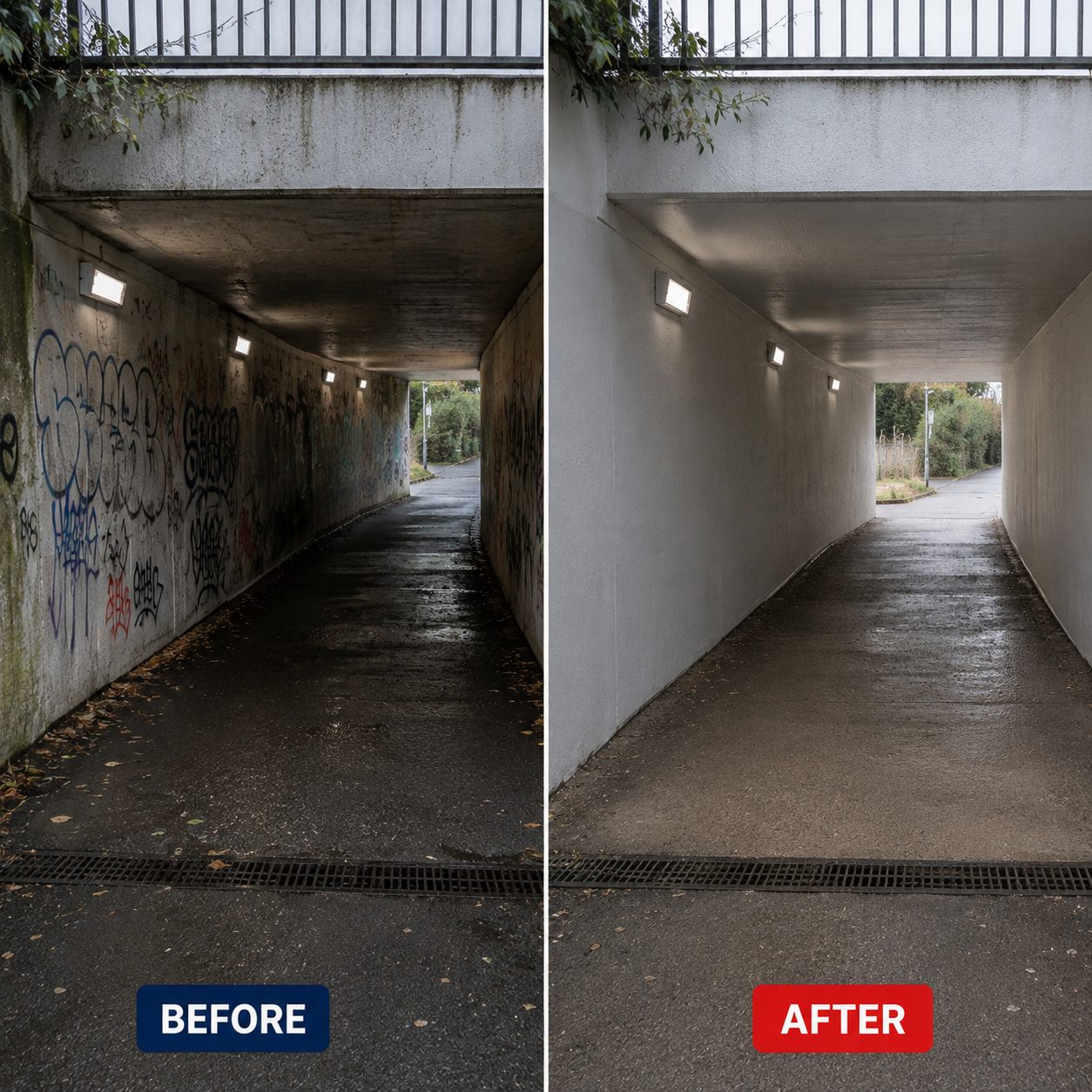
An anti-graffiti coating doesn't stop anyone spraying a wall. What it does is stop the paint reaching the surface underneath, so the next tag comes off with hot water instead of needing a specialist clean. There are two main types, and picking the wrong one can cost you money or even damage the wall.
At a glance
| Sacrificial coating | Permanent coating | |
|---|---|---|
| What it is | A soft, breathable wax or polysaccharide-based film | A hard polyurethane or fluoropolymer film bonded to the surface |
| After a clean | Comes off with the graffiti and must be re-applied | Stays in place and keeps protecting |
| Lifespan | Until the next clean, and it weathers over time | Many years on a well-prepared surface, often a decade or more |
| Breathable? | Yes, safe for historic and lime-mortared masonry | No, wrong for walls that need to dry out |
| Appearance | Little or no visible change | Often a slight sheen or deeper colour |
| Upfront cost | Lower | Higher, recovered over the number of tags it handles |
What is a sacrificial anti-graffiti coating?
A sacrificial coating sits on the surface as a thin, breathable film. When graffiti goes over it, hot water removes both the paint and the coating together. The wall is clean, but that patch has lost its protection, so the coating is re-applied after each clean.
Because it's breathable and nearly invisible, it's the usual choice for heritage buildings, natural stone and lime mortar. Removal is simple enough that a site's own team with a hot-water unit can often deal with a tag within hours.
What is a permanent anti-graffiti coating?
A permanent coating cures into a hard, non-porous film. Graffiti can't grip it, so it washes off with water or a mild solvent and the coating stays intact. It handles repeated cleans without being re-applied.
The trade-offs are cost and appearance. It costs more to apply, it usually changes the look of the surface slightly, and because it doesn't breathe it's the wrong product for damp-sensitive or historic walls.
Pros and cons
Sacrificial
- ✓Breathable, safe for heritage masonry
- ✓Little or no change in appearance
- ✓Lower upfront cost
- ✓Simple removal, often by your own team
- ✕Needs re-applying after every clean
- ✕Weathers over time even without graffiti
Permanent
- ✓Handles repeated tags without re-applying
- ✓Can last a decade or more
- ✓Lowest cost per incident on frequently hit sites
- ✕Not breathable, wrong for historic walls
- ✕Can add a slight sheen
- ✕Higher upfront cost
How do I choose between sacrificial and permanent?
- The surface comes first. If the wall needs to breathe (historic brick, lime mortar, natural stone, some renders), choose sacrificial, whatever the budget.
- Then how often it's hit. Tagged once or twice a year: sacrificial. Tagged monthly: permanent, because re-applying a sacrificial coat every few weeks soon costs more.
- Then who cleans it. If you have an in-house team with a hot-water unit, a sacrificial coating lets them clear tags within hours.
- Never coat a failing surface. Crumbling brick or blown render needs repairing first.
Preparation is most of the job
Both types fail the same way: applied over a surface that wasn't properly cleaned. Any leftover graffiti, dirt or algae gets sealed in underneath. So the order is always the same: remove everything, let the surface dry fully, then apply, usually in two coats.
Frequently asked questions
Does an anti-graffiti coating stop graffiti?
No. It stops paint reaching the surface, so graffiti comes off quickly with hot water and leaves no shadow. It changes what each incident costs, not whether it happens.
How long does an anti-graffiti coating last?
A permanent coating can last many years, often a decade or more on a well-prepared surface. A sacrificial coating lasts until the next clean and weathers over time, so it's re-applied as needed.
Can you put an anti-graffiti coating on a listed or heritage building?
Usually a sacrificial coating, because it's breathable and nearly invisible. Permanent coatings trap moisture, which can damage historic masonry.
Is an anti-graffiti coating worth it?
As a rule of thumb, yes if a surface is tagged more than once or twice a year. Every clean after that is faster and cheaper.
Want an honest view on coating your site?
Send us photos of the surfaces that keep getting hit. We'll tell you whether a coating is worth it, and which type. Or call 0161 399 5247.