Quick answer
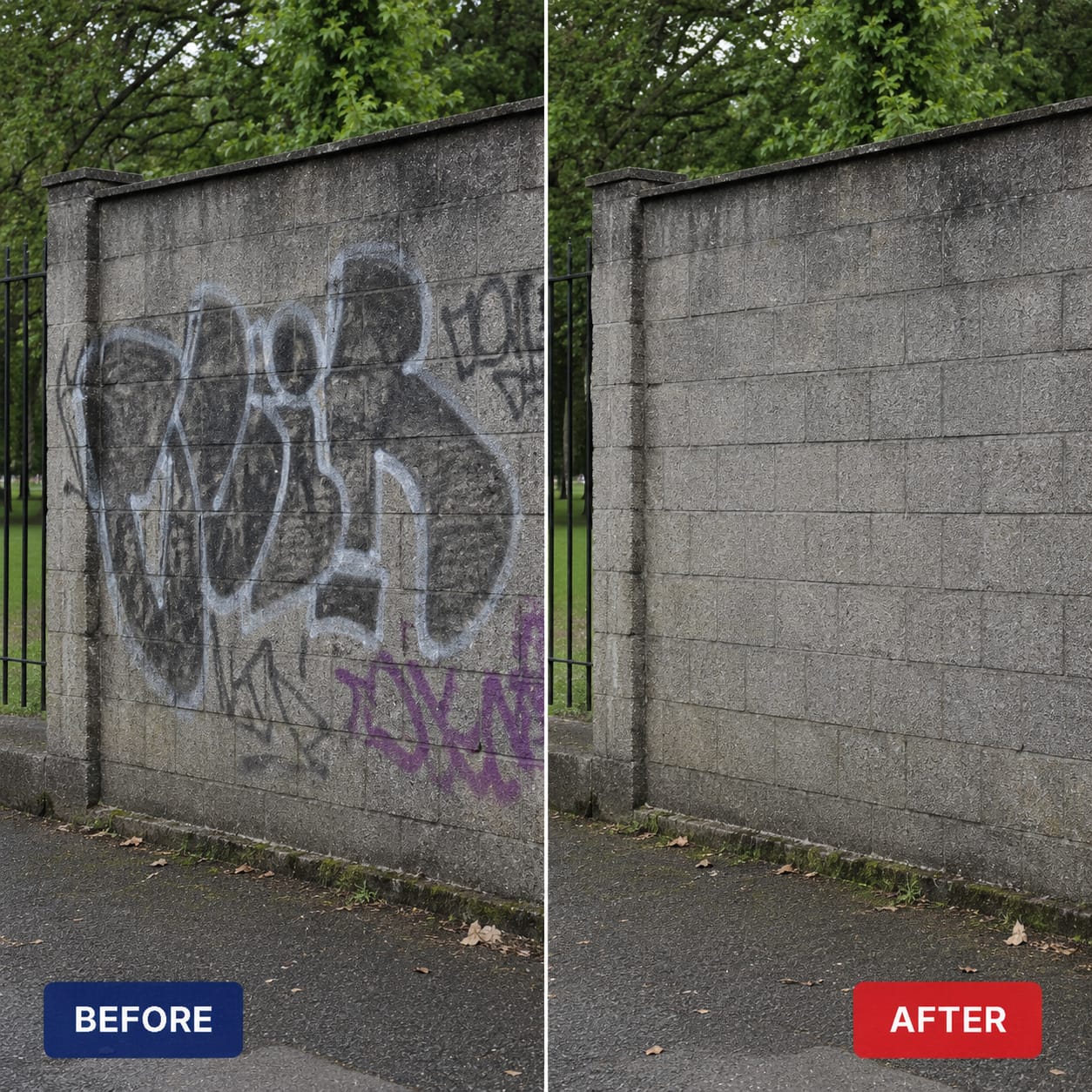
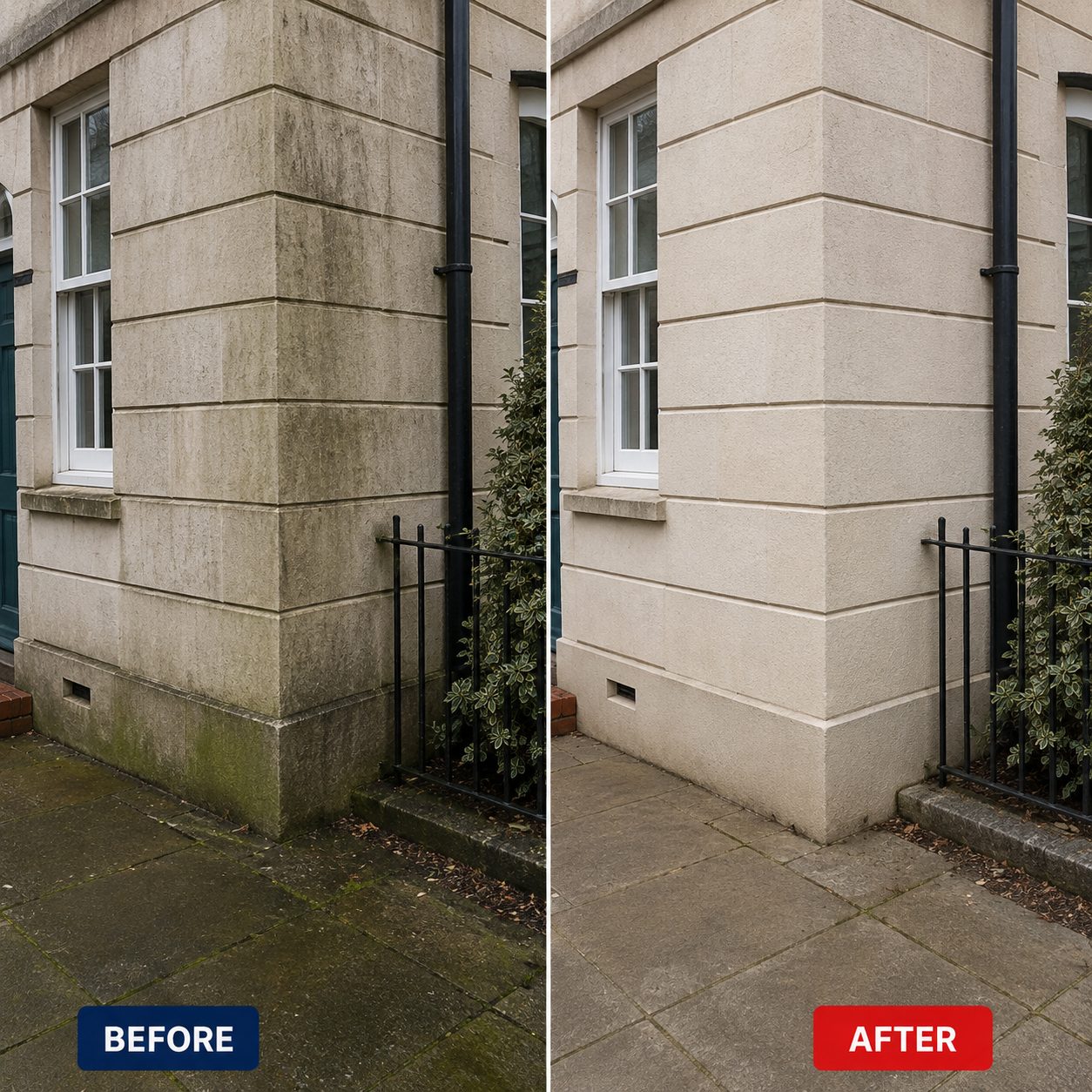
Steam and chemical graffiti removal do different jobs. Low-pressure superheated steam, at around 150°C, is the gentle first choice for brick, stone and render, and leaves no chemical residue. Chemical removers and poultices are needed when paint has soaked deep into a porous surface. On difficult jobs professionals test both, and often use them together.

Ask two contractors how they'd remove the same tag and you might hear two different answers: steam, or a chemical remover. Neither is always right. They work in different ways, suit different surfaces and leave different things behind.
This guide explains how each method works, where each one wins, and why most difficult jobs end up using a bit of both.
At a glance
| Steam and hot water | Chemical removers and poultices | |
|---|---|---|
| How it works | Heat breaks the bond between paint and surface; a gentle flow of water lifts it away | Removers break down the paint's binder; poultices draw stains back out of the pores |
| Best for | Soft or historic stone, heritage brick, lime mortar, render, painted masonry | Paint that has soaked deep into porous brick, stone or concrete |
| Residue | None, it's just water | Needs containment, neutralising and a safety assessment |
| Sensitive sites | Ideal near schools, play areas, food premises and watercourses | Only where run-off can be contained |
| Limits | Deep-set paint in porous stone may still leave a shadow | Wrong product on the wrong surface can bleach or stain it |
How does steam graffiti removal work?
Superheated steam systems, such as the DOFF and ThermaTech families of equipment, heat water to around 150°C at the nozzle but deliver it at very low pressure. The heat softens the paint and breaks its grip on the surface, and a small volume of water carries it away.
Because it relies on heat rather than force, steam doesn't blast out mortar or strip the face off soft stone the way a pressure washer can. It uses far less water than a pressure washer too, so there's less run-off and the wall dries faster.
How does chemical graffiti removal work?
Spray paint arrives as a fine mist, which is ideal for getting into the tiny pores of brick, sandstone and concrete. Once it's in there, heat and water alone often can't reach it.
A specialist remover breaks down the binder that holds the paint together so it can be flushed back out of the surface. For the deepest staining, a poultice is applied as a paste and left to draw the pigment out over hours or days. Different paints need different products, so the right one is chosen from a small test patch first.
Used well, chemistry is precise and gentle. Used badly, it bleaches stone, burns mortar and ends up in drains. Always test first, and always contain the run-off.
Why not just pressure wash it?
On a hard, modern surface a pressure washer can work. On brick, render and stone it often makes things worse: it drives water and paint deeper, opens up mortar joints and can leave a permanent shadow of the tag. That's why specialists reach for heat or chemistry rather than more pressure.
Which should you choose?
- Heritage, soft or historic surfaces: start with steam. It's the gentlest method that works.
- Schools, play areas, healthcare and food premises: steam, because it leaves no chemical residue.
- Fresh tags on most surfaces: steam usually does the job on its own.
- Old paint deep in porous stone, brick or concrete: a chemical remover or poultice, often followed by steam to rinse.
- Next to a canal, river or sensitive drainage: chemical-free methods, unless run-off can be fully contained.
Using both together
On many real jobs the answer is both. Steam lifts everything it can, a targeted remover or poultice deals with whatever is left in the pores, and steam rinses the surface clean. Doing it in that order keeps the amount of chemical used to a minimum.
Frequently asked questions
Is steam better than chemicals for removing graffiti?
Steam is the better first choice on most masonry because it's gentle and leaves no residue. Chemicals are better when paint has soaked deep into a porous surface. Many jobs use both.
Is steam graffiti removal safe on brick and stone?
Yes. Superheated steam works at very low pressure, so it doesn't erode brick faces, open mortar joints or strip soft stone the way a pressure washer can. A small test patch is still done first.
Can graffiti be removed without chemicals?
Often, yes. Heat, water and gentle brushing remove most fresh graffiti, gum and grime. The exception is old paint that has soaked deep into porous stone, which may need a poultice.
Will graffiti removal leave a shadow?
It can, especially on porous surfaces that were pressure washed or treated with the wrong product. Matching the method to the surface and testing first gives the best chance of a clean finish.
Not sure which method your wall needs?
Send us a photo and the location. We'll tell you the safest method and give you a free quote. Or call 0161 399 5247.